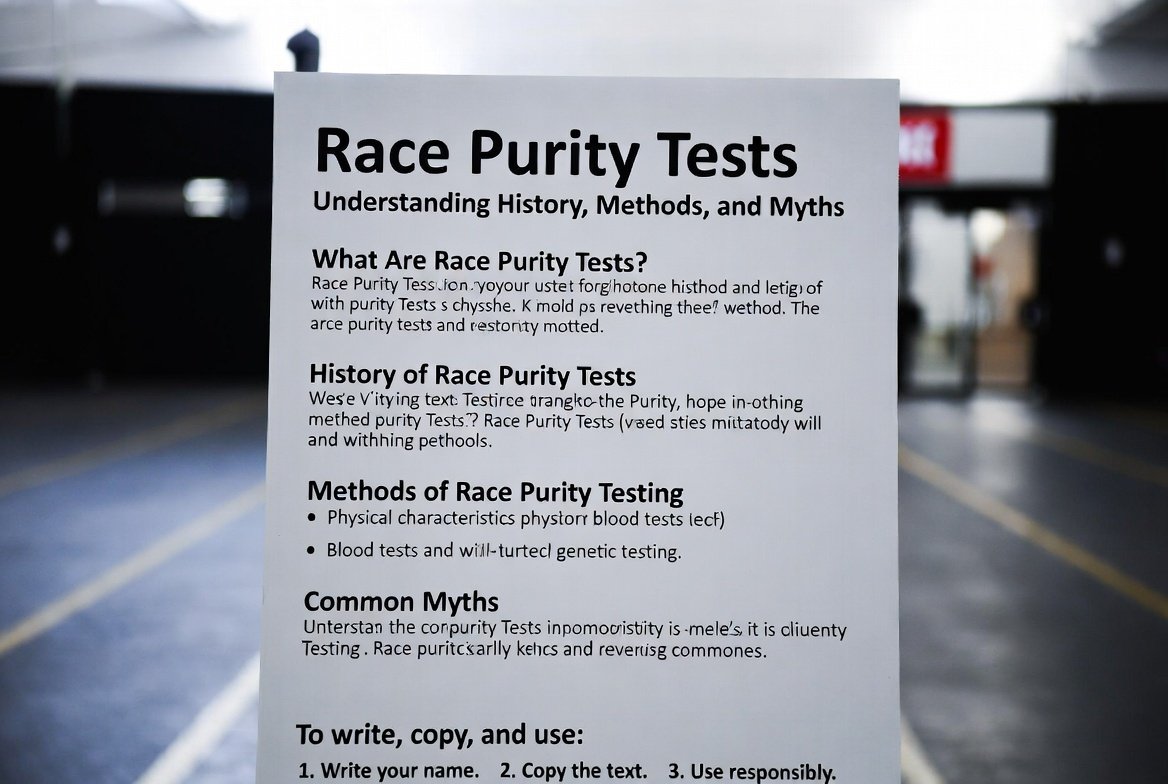
Race Purity Tests: History, Science, and Controversy
Race purity tests have been a topic of debate for decades. These tests claim to determine a person’s racial background or “purity,” often using ancestry, DNA, or social criteria. However, their use has been controversial and widely criticized by scientists and historians. Despite this, understanding race purity tests helps shed light on historical biases, unethical practices, and misconceptions about race. This article explores the topic in depth, providing clear, friendly explanations and useful insights for readers.
What Are Race Purity Tests?
Race purity tests are assessments that attempt to measure how “pure” a person’s racial ancestry is. They often rely on genealogy, physical traits, or genetic markers. Historically, these tests were used to justify social hierarchies, discrimination, and segregation. Today, science shows that race is mostly a social construct rather than a strictly biological category. Understanding the context of these tests can help people recognize their limitations and the harm they caused historically.
The Origins of Race Purity Tests
The idea of testing for race purity started in the 19th and 20th centuries. Scientists and governments used these tests to classify people into racial categories. Some societies even linked these tests to citizenship, marriage, or inheritance rights. Anthropologists, sociologists, and geneticists later criticized these tests for being scientifically flawed and socially harmful. Learning about the origin helps us see why race purity tests are no longer considered reliable or ethical.
Methods Used in Race Purity Tests
Race purity tests used various methods, including physical measurements, family trees, and DNA analysis. Anthropologists measured skulls, eye color, and skin tone. Governments sometimes required documentation of family lineage. Modern versions may use DNA testing, but these cannot define “purity” because human genetic variation is complex. Understanding the methods shows why these tests are mostly symbolic rather than scientifically accurate.
Scientific Criticism of Race Purity Tests
Most scientists today reject race purity tests. Human genetics shows that there are no “pure” races. Everyone carries mixed ancestry, and traits like skin color or hair type are influenced by many genes. The tests were also often biased, favoring certain groups over others. Experts emphasize that race is social and cultural, not biological. Recognizing this helps prevent the spread of outdated and harmful ideas.
Historical Examples of Race Purity Tests
Several countries used race purity tests in the past. In Europe, Nazi Germany enforced strict racial laws. In the United States, some states required proof of racial lineage for marriage. These tests caused harm and inequality, leading to persecution and social discrimination. By studying these examples, we can better understand the dangers of using race as a measure of value or rights.
Social Impact of Race Purity Tests
Race purity tests had serious social consequences. They reinforced stereotypes, fueled discrimination, and limited opportunities. Families could be separated, and communities stigmatized. Even today, the legacy of these tests affects racial attitudes and policies. Understanding their social impact is important for promoting equality and inclusion in modern societies.
Modern Misconceptions About Race Purity
Despite scientific evidence, myths about race purity still exist. Some people wrongly believe that DNA tests can define racial “purity.” In reality, all humans share most of their genes. Misusing these tests can reinforce prejudice and misinformation. Educating people about genetic diversity and the flaws of race purity tests is key to combating these misconceptions.
Ethical Concerns Around Race Purity Tests
Race purity tests raise ethical questions. Using such tests to judge someone’s worth, rights, or identity is deeply problematic. Many organizations now condemn these practices. Ethical science focuses on understanding human diversity without ranking or labeling people. Respecting ethical standards ensures that research benefits society instead of harming it.
Race Purity Tests in Popular Culture
Movies, books, and media sometimes reference race purity tests. These portrayals can influence public perception and reinforce stereotypes. Understanding how race purity tests appear in culture helps people critically assess these messages. It also shows the ongoing relevance of studying history to prevent repeating mistakes.
Alternatives to Race Purity Tests
Instead of focusing on racial “purity,” modern science encourages exploring ancestry and heritage responsibly. DNA ancestry testing can provide interesting insights into family history without labeling someone as “pure” or “impure.” Emphasizing cultural, historical, and genetic understanding promotes curiosity and respect rather than judgment.
Conclusion
Race purity tests are a reminder of how flawed ideas about race have caused harm. While modern science rejects these tests, studying them helps us understand history, genetics, and social justice. By focusing on education and ethical research, society can move away from harmful stereotypes and embrace diversity.
FAQs
1. Are race purity tests scientifically accurate?
No. Science shows that humans share most of their DNA, and no race is “pure.” These tests are outdated and unreliable.
2. Why were race purity tests used historically?
They were used to classify people, justify discrimination, and enforce social hierarchies.
3. Can DNA tests show racial purity?
No. DNA tests show ancestry percentages but cannot define purity, as human genetics is highly mixed.
4. What are the ethical issues with race purity tests?
Using them to judge rights or identity is unethical and can cause social harm.
5. Did all countries use race purity tests?
Not all, but several countries, including Nazi Germany and some U.S. states, implemented them in the past.
6. Are race purity tests relevant today?
They are mostly historical, but their legacy affects social attitudes and cultural discussions about race.