Winnie the Pooh Characters: Names, Personalities, and Mental Health Insights
Winnie the Pooh is a beloved classic, enchanting readers and viewers of all ages. Created by A.A. Milne, these characters live in the Hundred Acre Wood and have captured hearts worldwide. But beyond their fun and adventurous stories, each character carries unique personality traits, and many even reflect real-life mental health conditions. In this article, we will explore all Winnie the Pooh characters, their names, what they represent, their mental disorders, and more.
All Winnie the Pooh Characters and Their Names
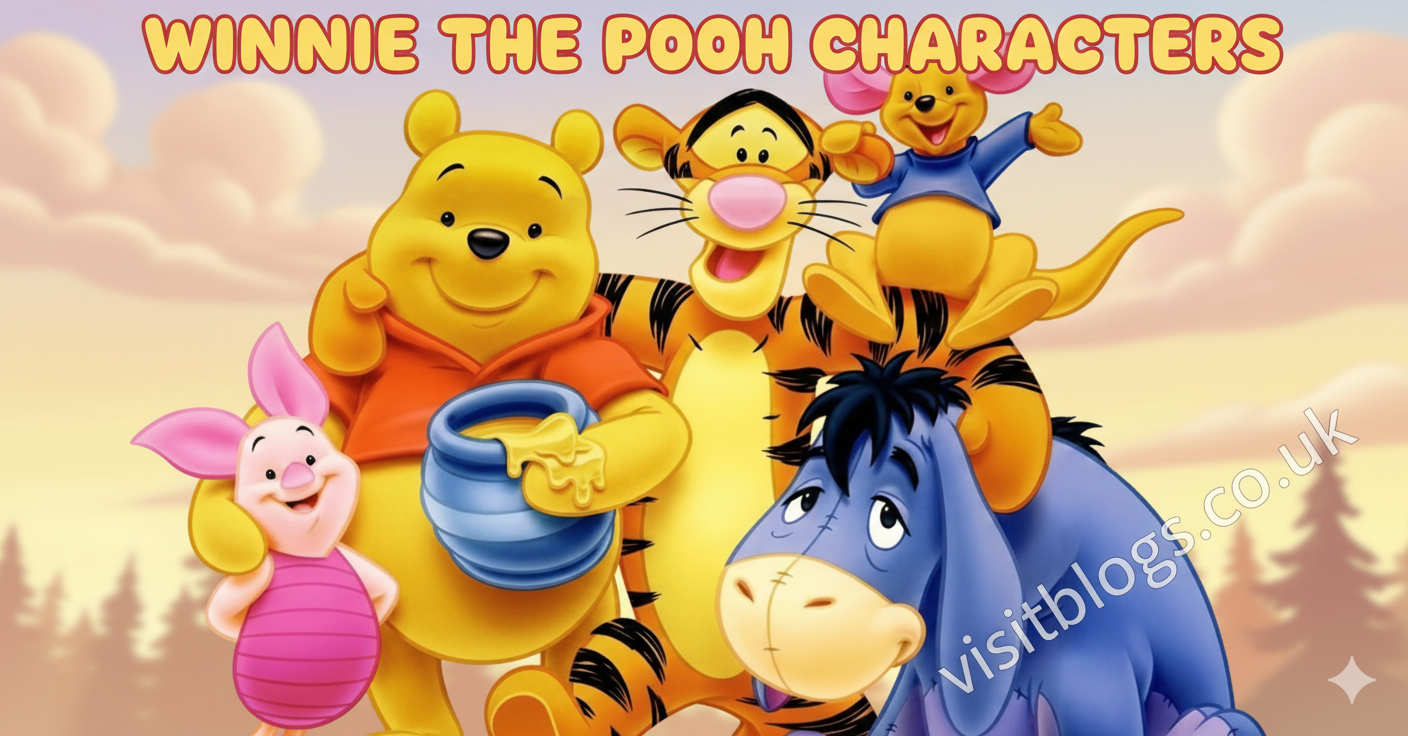
The Winnie the Pooh characters are more than just cuddly toys and cartoon figures. The main cast includes Winnie the Pooh himself, Piglet, Eeyore, Tigger, Rabbit, Kanga, Roo, and Owl. Each character has a distinctive personality, which makes them memorable. Baby Winnie the Pooh characters are also adored by fans, especially in animated series and merchandise for younger children. For those looking for Winnie the Pooh characters’ names and pictures, numerous illustrations and drawings capture their charm perfectly. Classic Winnie the Pooh characters remain timeless, with pictures and drawings still widely used in coloring pages and art projects.
| Full Name | Winnie the Pooh |
|---|---|
| Creator | A.A. Milne |
| First Appearance | 1926, in “Winnie-the-Pooh” book |
| Species | Bear |
| Gender | Male |
| Personality Traits | Friendly, Loving, Naive, Food-Loving, Calm |
| Mental Traits | Obsessive about honey, Gentle, Sometimes Forgetful |
| Famous Friends | Piglet, Tigger, Eeyore, Rabbit, Owl, Kanga, Roo |
| Notable Facts | One of the most beloved characters in children’s literature, Represents innocence and joy, Appears in movies, shows, and merchandise |
| Mental Health Insights | Eeyore represents depression, Piglet shows anxiety, Tigger displays hyperactivity, Rabbit has obsessive traits |
What Do the Winnie the Pooh Characters Represent?
Each character in Winnie the Pooh symbolizes specific personality traits and sometimes mental health conditions. Winnie the Pooh himself represents a simple, joyful, and sometimes obsessive personality, mostly revolving around his love for honey. Piglet, small and timid, often reflects anxiety or nervousness but also demonstrates courage when needed. Eeyore, the melancholic donkey, is frequently associated with depression. Tigger is energetic, impulsive, and sometimes represents hyperactivity. Rabbit shows traits of control and perfectionism, while Owl is wise but often pedantic. Kanga and Roo display nurturing and playful traits, respectively. Understanding what the characters in Winnie the Pooh represent allows fans to connect with them on a deeper psychological level.
Winnie the Pooh Characters Mental Disorders
Over the years, scholars and psychologists have analyzed Winnie the Pooh characters’ mental health. Some experts have suggested that the characters can represent mental disorders, providing an engaging way to understand complex psychological conditions. Winnie the Pooh characters mental disorders can include anxiety, depression, ADHD, and obsessive tendencies. For example, Eeyore’s persistent sadness mirrors depressive symptoms, while Tigger’s boundless energy is sometimes associated with ADHD. Piglet’s nervousness can be linked to generalized anxiety, and Rabbit’s obsessive behaviors reflect compulsive traits. This mental health perspective has led to discussions about the Winnie the Pooh characters mental disorders test, which can be a fun, educational way to learn about psychology.
What Are the Winnie the Pooh Characters Disorders?
When exploring what disorders do the Winnie the Pooh characters represent, it’s fascinating to see how children’s literature can subtly mirror real-life conditions. Mental illnesses such as depression, anxiety, hyperactivity, and obsessive behaviors are reflected in these characters. Eeyore demonstrates depressive traits, Piglet exhibits anxiety, Tigger displays hyperactivity, and Rabbit shows signs of obsessive behavior. Even minor characters may reflect personality quirks or mental challenges, helping readers identify traits in a relatable and gentle way.
Winnie the Pooh Characters Personality Types
The Winnie the Pooh characters personalities are diverse and intriguing. Pooh is kind-hearted, innocent, and often naive, focusing on enjoying the simple pleasures of life. Piglet is cautious and sensitive but brave when facing fears. Eeyore is gloomy yet loyal and wise in his own way. Tigger is confident, playful, and impulsive, adding excitement to the Hundred Acre Wood. Rabbit is meticulous, organized, and sometimes rigid, while Owl represents knowledge and wisdom, often sharing advice. Kanga is nurturing, responsible, and caring, and Roo brings youthful curiosity and energy. Understanding these personalities adds depth to the beloved stories.
Winnie the Pooh Characters Drawings and Coloring Pages
Fans of Winnie the Pooh can enjoy various forms of art, including Winnie the Pooh characters drawings and coloring pages. These visual representations allow children and adults to engage creatively with the characters. Whether it’s how to draw Winnie the Pooh characters or coloring pages that feature Tigger bouncing around, these artistic outlets make the stories interactive and memorable. Pictures of the Winnie the Pooh characters are often used in classrooms, children’s books, and fan art, highlighting their universal appeal.
How Many Characters Are in Winnie the Pooh?
Many people wonder, how many Winnie the Pooh characters are there? The core group consists of eight main characters: Pooh, Piglet, Eeyore, Tigger, Rabbit, Owl, Kanga, and Roo. However, across various adaptations, including baby Winnie the Pooh characters and newer media, the total number expands to include minor characters like Heffalumps and Woozles. Exploring all Winnie the Pooh characters allows fans to appreciate the full world of the Hundred Acre Wood.
Classic Winnie the Pooh Characters Costumes and Public Domain
Classic Winnie the Pooh characters continue to inspire merchandise, costumes, and themed events. Fans can dress as their favorite characters using detailed costumes that reflect the original designs. Interestingly, some Winnie the Pooh characters are public domain, which means they can be used freely in creative projects, books, and fan art without copyright restrictions. This opens opportunities for new adaptations while preserving the charm of the original stories.
Conclusion
The world of Winnie the Pooh is timeless and multi-layered. From the cuddly and adventurous Pooh to the melancholic Eeyore and energetic Tigger, each character brings joy, lessons, and sometimes subtle insights into mental health. Exploring Winnie the Pooh characters names and pictures, their personalities, and even potential mental disorders helps fans connect with the stories on a deeper level. Whether through drawings, coloring pages, costumes, or public domain adaptations, these classic characters continue to captivate audiences of all ages. Understanding what the characters in Winnie the Pooh represent allows both children and adults to enjoy not just the humor and warmth, but also the psychological depth of these beloved tales.
FAQs
Who are the characters in Winnie the Pooh?
The main characters include Winnie the Pooh, Piglet, Eeyore, Tigger, Rabbit, Owl, Kanga, and Roo. Baby Winnie the Pooh characters are also featured in newer adaptations.
What mental disorders do Winnie the Pooh characters represent?
Eeyore represents depression, Piglet shows anxiety, Tigger exhibits hyperactivity, and Rabbit displays obsessive traits. Other characters reflect various personality traits and mental health nuances.
How many characters are in Winnie the Pooh?
The main cast consists of eight characters, but including minor characters, there are more across different media adaptations.
What do the characters of Winnie the Pooh represent?
Each character represents specific personality types, emotions, or traits, often reflecting real-life mental health conditions or human behaviors.
Which Winnie the Pooh characters are public domain?
Some early versions of Winnie the Pooh characters created by A.A. Milne have entered the public domain, allowing free creative use.
How can I draw Winnie the Pooh characters?
Fans can start with simple shapes for each character, focusing on their unique features like Pooh’s round belly, Tigger’s stripes, and Piglet’s small stature. Many tutorials and coloring pages are available for guidance.