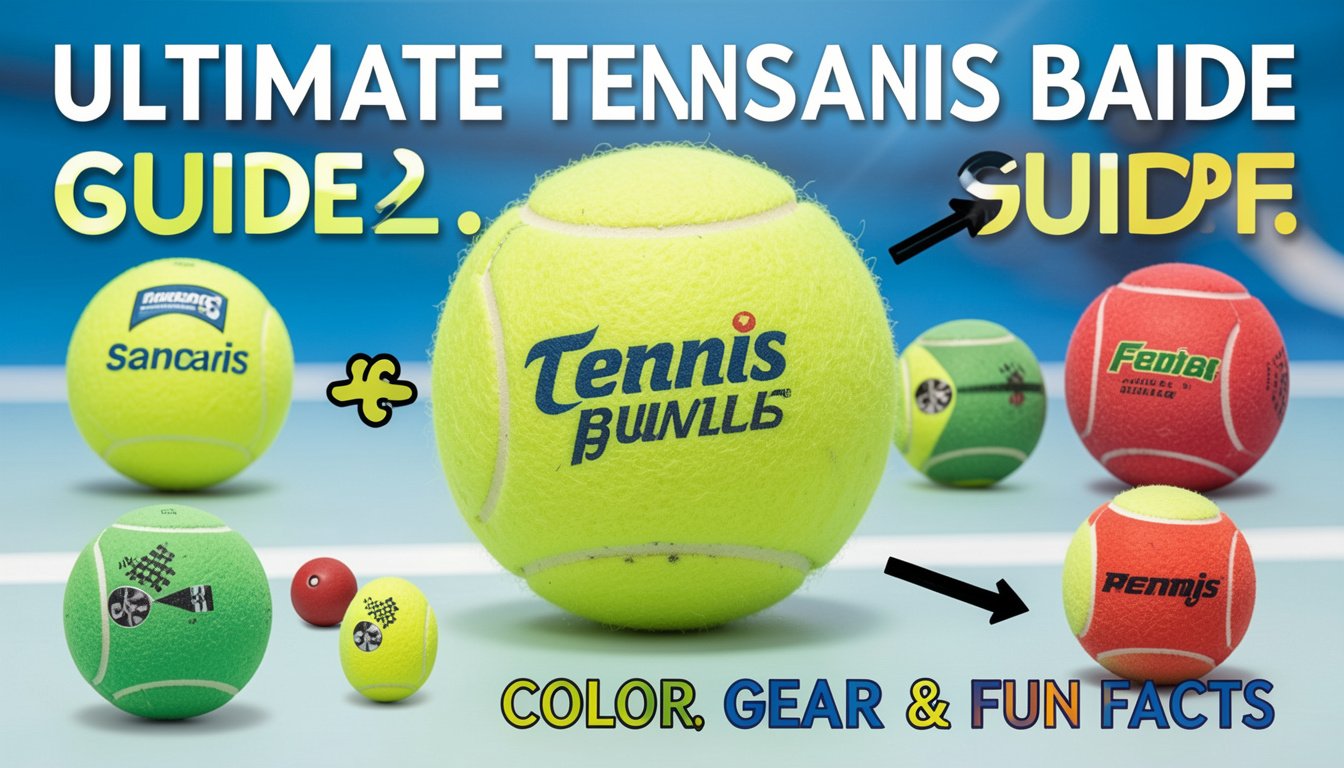
Have you ever wondered why a standard tennis ball feels so fuzzy in your hand? Or why it bounces so high when you hit it across the net? That bright round sphere is more than just a simple piece of sports gear. It is a carefully engineered object made for high-speed games, training sessions, pet play, and creative art projects.
In this guide, we will explore everything you need to know about this popular yellow gear. We will look at its exact size specs, official court colors, essential practice tools, and pop culture references. Whether you play matches every weekend or love fun pop culture trivia, this helpful breakdown covers all the details you need.
Tennis Ball Quick Reference & Biography Table
Before we dive into the details, here is a quick overview of the physical facts and specs of a standard regulation ball.
| Feature | Official Specification / Detail |
| Official Weight | 56.0 to 59.4 grams (1.975 to 2.095 oz) |
| Official Diameter | 6.54 to 6.86 cm (2.57 to 2.70 inches) |
| Standard Color | Optic Yellow (Fluorescent Yellow) |
| Core Material | Hollow pressurized rubber shell |
| Outer Material | Wool and synthetic felt coating |
| Key Equipment | Hopper, training machine, dog launcher |
| Popular Culture | Tennis Ball BFDI character, artistic cliparts |
What Color Is a Tennis Ball? The Big Yellow-Green Debate
People often argue about the true shade of a standard match ball. Is it yellow, green, or a mix of both? If you ask your friends, you will probably get completely different answers.
The International Tennis Federation officially calls this hue “optic yellow.” Manufacturers started using this bright fluorescent shade in 1972 so viewers could see the tennis ball easily on color television screens. Before that change, most match balls were plain white or black.
Measuring the Standard Tennis Ball Diameter
How big is a standard match ball? Size consistency is very important for fair gameplay and predictable bounces.
Official rules state that the standard tennis ball diameter must measure between 2.57 inches and 2.70 inches (6.54 cm to 6.86 cm). This careful size control ensures that every brand bounces predictably when struck by a strung racquet frame.
If a sphere is too small, it flies through the air too quickly. If it is too large, air resistance slows it down too much.
Level Up Your Practice with a Tennis Ball Machine
Practicing your groundstrokes alone can be tough without a partner. That is where a smart tennis ball machine becomes your best training companion.
These automated devices shoot balls across the net at steady speeds, controlled angles, and custom topspin settings. Using one lets you practice your forehand, backhand, and volley shots for hours. High-end modern versions even connect to smartphone apps so you can build custom drills.
Save Your Back with a Tennis Ball Hopper
Picking up dozens of scattered loose balls after a hard practice session takes a lot of time and tires out your back. A sturdy tennis ball hopper solves this problem completely.
A hopper is a lightweight wire basket featuring flexible bottom bars. When you press the basket down over a loose tennis ball, the bottom wires open slightly and pull the sphere inside. You can store 50 to 100 balls at once and flip the handles down to turn the basket into a standing basket.
Keeping Pets Happy with a Tennis Ball Launcher
Dogs love chasing bouncing yellow spheres across grass fields. However, throwing a ball over and over again can tire out your arm quickly.
An automatic or manual tennis ball launcher lets you throw balls much farther with minimal arm effort. Hands-free pickup arms also keep your fingers clean from dog slobber during outdoor fetch sessions.
Unleash Your Creativity: How to Make a Simple Tennis Ball Drawing
Drawing sports gear is a fun and easy art exercise for beginners. Here is how you can create your own quick tennis ball drawing in just a few simple steps:
- Draw a clean, perfect circle on your sheet of paper.
- Add two curved parallel S-lines curving inward across the circle to create the famous seam pattern.
- Color the inner area with a bright neon yellow-green marker.
- Shade around the outer edge with light green to make it look 3D.
- Draw tiny thin lines along the border to mimic fuzzy surface felt.
Finding Digital Graphics and Tennis Ball Clipart
If you are designing a sports event poster, a club flyer, or a school presentation, you might need high-quality graphics. Looking for a clean tennis ball clipart illustration gives you easy, ready-to-use digital images with transparent backgrounds.
Vector graphics allow you to resize images without losing visual quality. You can find free royalty-free graphics across many popular design websites.
Creative Nature Art: What Is a Tennis Ball Bird?
Craft lovers like to reuse worn-out sports gear in creative ways. A popular DIY project is the tennis ball bird, where people turn old, dead balls into charming backyard garden decorations.
By cutting a small opening for a mouth, adding craft eyes, and sticking colorful feathers on the sides, you turn used gear into cute hanging ornaments or bird feeders. It is an eco-friendly way to keep old rubber out of local landfills!
Who Is Tennis Ball BFDI? Meet the Animated Character
Beyond real-life courts, this yellow sphere is also a famous cartoon star. Tennis Ball BFDI is a fan-favorite character in the popular animated YouTube web series Battle for Dream Island.
In the show, this character is known for being smart, friendly, analytical, and clumsy. He relies on scientific logic to solve challenge puzzles alongside his best friend, Golf Ball.
How to Choose the Right Type for Your Game
Not every felt sphere behaves the same way on court surfaces. Here is a breakdown to help you pick the best match for your needs:
- Extra Duty Felt: Best for hard asphalt courts because the thick felt resists heavy friction.
- Regular Duty Felt: Best for clay or indoor courts where fluffing must be kept minimal.
- Pressureless Balls: Great for practice machines because they never lose their internal bounce over time.
- High Altitude Balls: Made for high elevation areas so they do not fly out of control in thin air.
Conclusion
The classic tennis ball is a simple yet brilliantly designed piece of sports equipment. From precise manufacturing specs like diameter and color to automated practice tools like hoppers and machines, it plays a massive role in sports, dog fetching, art projects, and pop culture. Next time you step onto a court, you will appreciate all the engineering behind that fuzzy neon sphere!
Frequently Asked Questions
Why are tennis balls fuzzy on the outside?
The outer felt cover controls speed and bounce height. The fuzzy texture grabs the air to slow down flight speeds while giving racquets spin control.
How long does a fresh tennis ball stay bouncy?
Pressurized balls usually lose optimal bounce within 1 to 3 matches of heavy play. Unopened cans can stay fresh on store shelves for over two years.
Can dogs play with standard human tennis balls?
Standard balls are fine for brief fetch games, but aggressive chewers can strip off the felt or break the rubber core. Always monitor pet play time closely.
Are all professional tennis balls pressurized?
Yes, official professional tour matches always use pressurized balls because they offer superior bounce height, speed, and overall play performance.
How do you store extra balls so they last longer?
Keep your extra equipment inside a cool, dry room away from direct sunlight. Extreme heat or cold rapidly drains internal air pressure.
Why do new cans make a loud popping sound when opened?
Cans are pressurized at the factory to match the internal pressure of the spheres inside. Opening the metal lid releases that compressed air instantly.